
Why Concert Photographers Only Get Three Songs
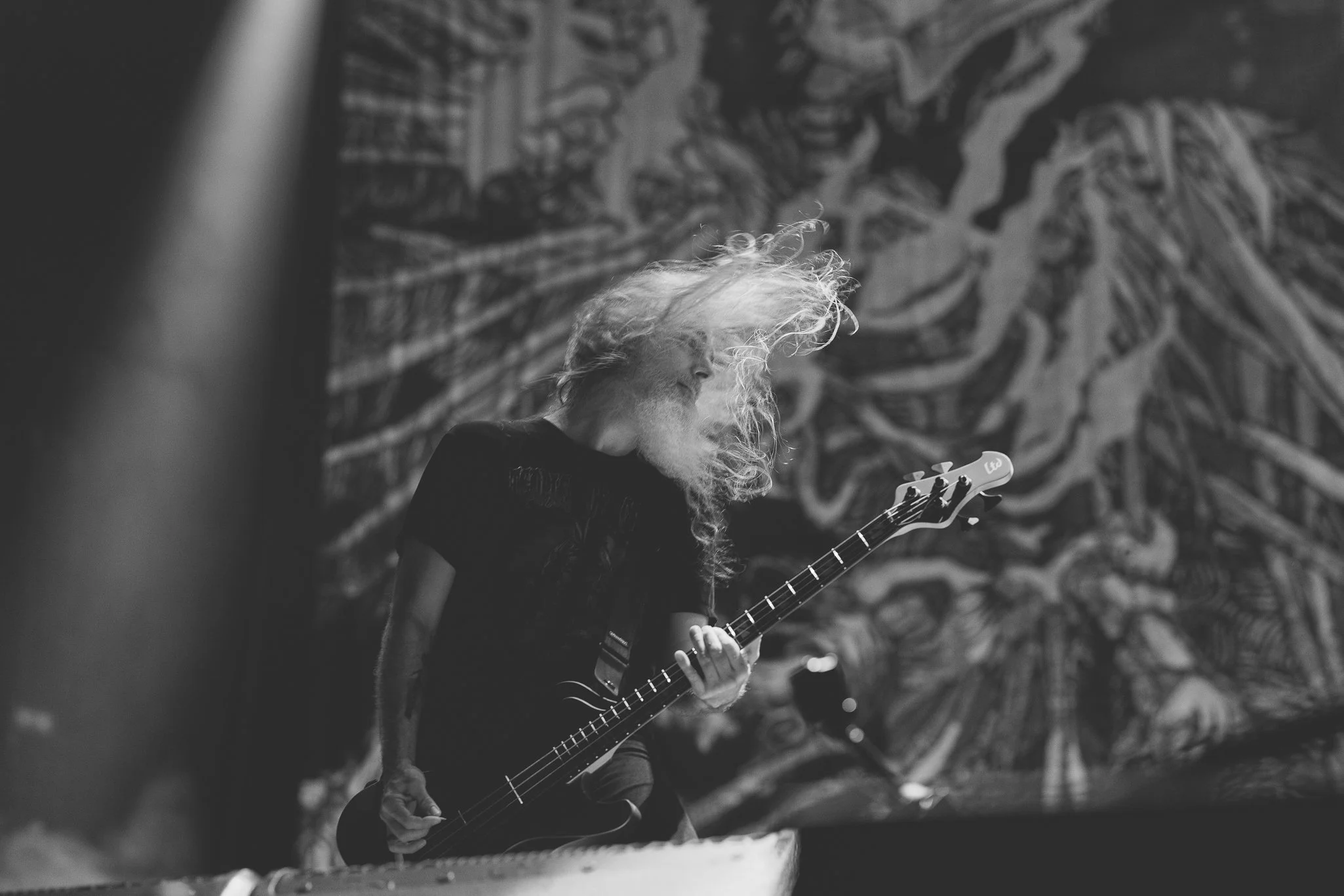
Lamb of God, Blue Ridge Rock Festival
If you have ever watched photographers gather in front of the stage at the beginning of a concert and then suddenly disappear, there is a reason.
Most concert photographers are permitted to photograph the first three songs—and usually without flash.
It is such a familiar rule within live music that it inspired the name Three Songs In. But outside the photo pit, most people have no idea how quickly those three songs actually pass.
The short answer is that limiting photography protects the experience for the artist and the audience. It keeps photographers from blocking the view throughout the show, reduces distractions and gives the production team control over when and how the performance is documented.
The longer answer is that every concert has its own rules.
Some artists allow three songs from the photo pit. Others allow only two. Occasionally photographers must shoot from the soundboard, from the audience or from one designated side of the stage. Some artists approve specific songs instead of the opening three. At smaller shows, there may be no formal restriction at all.
But “first three, no flash” remains the rule photographers encounter most often.
Three songs go faster than you think
By the time the lights go down, the work has already started.
Camera settings are checked. Lenses are chosen. Photographers are directed into position by security or a tour representative. Then the artist walks onto the stage and everything begins moving at once.
Lighting changes constantly. Microphone stands block faces. Artists move from one side of the stage to the other. Hands rise from the crowd. Smoke fills the frame. Another photographer may step into the exact position you were planning to use.
There is no asking the artist to repeat a moment.
If the singer leans into the crowd, the drummer throws a stick or the guitarist steps into the light, you either capture it or you don’t.
Three songs require a strange combination of preparation and instinct. You have to anticipate what might happen while responding to what is already happening.
No flash really means no flash
Flash would be distracting to both the performers and the audience, which is why it is prohibited at nearly every major concert.
That means photographers must work with whatever light the production gives them.
Sometimes the stage is bright and beautifully designed. Other times the singer remains almost completely in the dark. Red and blue lights can affect skin tones. Spotlights disappear without warning. Haze can make a photograph look cinematic—or completely destroy the contrast.
Breaking Benjamin was one of the darkest performances I have photographed. I had been warned ahead of time, but knowing it would be dark and actually working inside that darkness were two very different things.
It was also the first time I photographed a band that meant that much to me. There was no time to stop and absorb the fact that they were standing directly in front of me. For those three songs, emotion had to take a back seat to exposure, focus and timing.
The feelings arrived later.
Leaving the pit doesn’t mean the work is finished
When the third song ends, security usually signals that it is time to leave. Cameras are lowered, photographers file out and the audience finally gets an unobstructed view of the rest of the performance.
But that is only the end of shooting.
Afterward, hundreds—or sometimes thousands—of images have to be reviewed. Similar frames are compared. Focus is checked. Color is corrected. Photographs are selected based not only on technical quality but on whether they communicate something about the artist and the performance.
The obvious images usually stand out immediately. The more interesting ones do not always announce themselves as quickly.
Some of my favorite concert photographs were initially overlooked because they were quieter, darker or less technically perfect. Returning to an archive months later can reveal moments I didn’t recognize during the first edit.
Why the limitation can be a good thing
Of course I would sometimes love another song—especially when the lighting finally improves during song four.
But the limitation creates urgency.
You cannot spend half the show finding your rhythm. You have to enter the pit ready to make decisions. You learn to watch the lighting patterns, anticipate movement and adapt quickly when the plan falls apart.
Three songs force you to become fully present.
That is what I love most about concert photography. It is unpredictable, occasionally frustrating and completely alive. No two performances look the same, and no two photographers will walk away with exactly the same collection of moments.
Three songs may not sound like much.
Sometimes, it is all you need.